
I. Introduction
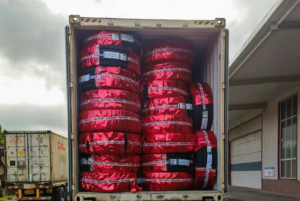
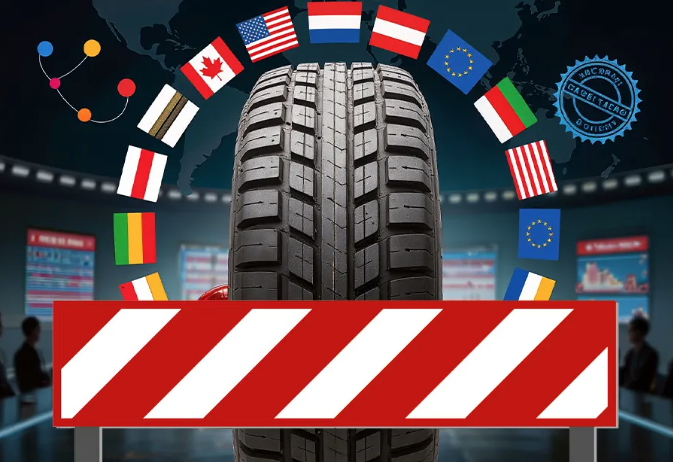
In 2026, China’s tire exports face synchronized trade restrictions across multiple markets. From North America to Eurasia, anti-dumping, countervailing, and stacked tariff measures covering passenger and truck tires have been introduced within months. The chinese tire tariff environment is no longer a short-term fluctuation but a structural shift. For overseas buyers, distributors, and industry partners, these measures affect tariff rates, supply chain stability, procurement costs, and long-term cooperation models. This article reviews the 2026 trade remedy cases and identifies response options for overseas partners.
II. Global Tariff Measures: North America and Eurasia
| Market | Measure | Rate / Scope |
|---|---|---|
| United States | Second sunset review of anti-dumping and countervailing duties (May 2026) | Dumping 87.99%; subsidy 21.68%–116.73%; total rate up to 190% with Section 301 and 2026 differentiated tariff |
| European Union | Anti-dumping duties effective July 8, 2026 | 4.3%–45.3% on passenger and light truck tires |
| Eurasian Economic Union | Second sunset review (August 2026) | 14.79%–35.35% on truck tires, five years, covering Russia and Kazakhstan |
| Canada | Anti-dumping and countervailing investigation (August 31, 2026) | Truck and bus tires, rim diameters 17.5–24.5 inches |
Key points:
A tire costing USD 100 reaches USD 290 upon arrival in the US, eliminating price advantage. This is the most significant anti dumping duty in usa measure affecting Chinese exporters, and a central component of the current chinese tire tariff landscape.
EU export volumes declined, with some companies reporting order reductions. These tyre anti dumping measures have materially affected export volumes.
The four measures were introduced within approximately ten days, covering two major markets.
III. Structural Issues in the Low-Price Model
China is the world’s largest tire producer and exporter, with capacity concentrated in mid- to low-end products.
Product homogenization is high, and export prices are lower than those of major international tire companies.
This model makes Chinese products a target for trade remedies.
In 2025, china tire export volume remained large, but profit accounted for approximately 8% of industry revenue.
Under a 190% tariff, this profit cannot cover tariff costs, and the low-price positioning limits access to high-end markets.
Some companies attempt to circumvent tariffs through Southeast Asian production, but US Customs has initiated “China content” reviews on tires from Thailand and Vietnam, and the EU has launched anti-circumvention investigations into Vietnamese tires.

IV. Limitations of Overseas Manufacturing
Under tariff pressure, overseas manufacturing has become one option for Chinese tire companies. In the first half of 2026, multiple overseas projects were announced, with total investment exceeding RMB 20 billion, involving Thailand, Vietnam, Cambodia, and Serbia.

Implementation reveals limitations. One Southeast Asian factory encountered an EU anti-circumvention investigation immediately after commissioning. Another overseas factory continued to face high tariffs for failing to meet US country-of-origin content standards. Production transfer alone is insufficient to secure a stable tire supply chain.
Foreign companies offer a contrast. Michelin’s South Carolina factory achieves localized procurement with a North American R&D center; Bridgestone’s European factories participate in synchronous development with OEMs. Most Chinese overseas factories remain assembly operations, with R&D, marketing, and supply chain functions still linked to domestic operations.
V. Response Directions
Under tariff conditions, low-price advantages no longer apply.
Premiumization:
Zhongce Rubber, Linglong Tire, and Double Coin Tire have invested in localized industrial chains.
Sailun Group has introduced Industry 4.0 standards at overseas factories, using intelligent manufacturing to improve product consistency.
Brand building:
Zhongce, Sailun, and Linglong have formed brand promotion systems combining sports marketing, media placement, and digital communication.
Brand investment has a long return cycle but supports long-term operations.
Supplier evaluation for overseas buyers and distributors:
Price comparison alone is insufficient.
Assess whether a supplier has overseas localized production capacity, a compliance management system, and continuous investment in brand and technology.
Given current china tire export conditions, a diversified tire supply chain strategy is essential for managing tariff exposure.

VI. Conclusion
For overseas buyers and distributors, understanding these changes helps identify suppliers with global operational capability. Selecting partners with technology, quality, and brand foundations is a viable path to maintaining supply chain stability under current trade conditions.
Forlander continues to monitor changes in the global commercial tire market and provides tire products and supply chain support to overseas distributors, fleet operators, and industry partners. Through continuous improvement of product consistency, quality management capabilities, and export service capabilities, Forlander is committed to establishing stable, long-term cooperative relationships with global customers to jointly address changing market conditions.