
I. Customer Feedback: Proven Reliability Verified by South Korean Ports

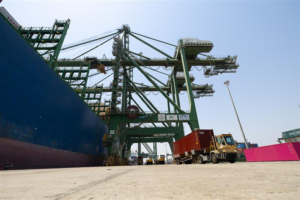
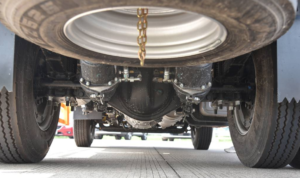
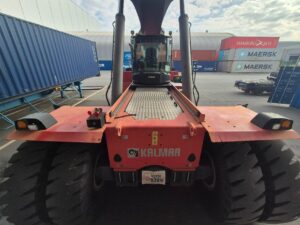
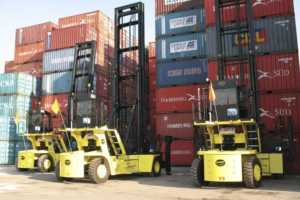
The Forlander E-3/L-3 21.00-25 tire has achieved a successful application case on gantry crane equipment at a major South Korean port: In 2025, a large port operator in South Korea bulk-installed this tire model on its gantry crane fleet. After more than a year of continuous use, the tires have demonstrated excellent air pressure retention stability and wear resistance. Common issues such as bead chafing and mid-life air leakage have been significantly improved.
Customer feedback indicates that the current load-bearing capacity and stability of the Forlander E-3/L-3 Port Tire fully meet the demands of high-frequency, high-intensity RTG operations. It effectively reduces equipment maintenance costs and the risk of operational interruptions, providing reliable support for the port’s efforts to enhance operational efficiency. This article will detail the features of the optimized 21.00-25 tire, covering aspects from structural design and construction design to finished product performance, with a particular focus on its application in port equipment tires.
II. Technical Requirements: Strict Adherence to National Standards
Our optimization design strictly follows the GB/T 2980—2018 “Earth-mover tyres—Specification, dimensions, inflation pressure and load” and GB/T 1190—2018 “Technical requirements of earth-mover tyres” standards. Addressing issues like abnormal bead wear and shoulder delamination observed in the Forlander E-3/L-3 Port Tire during port gantry crane usage, we have comprehensively improved and redesigned the tire’s profile, structure, tread pattern, and production process. This ensures the product meets the demands for long-term stable operation of port equipment.
III. Structural Design: Comprehensive Optimization and Upgrade
1. Outer Diameter and Section Width
The current Forlander E-3/L-3 Port Tire is designed with an outer diameter of 2050 mm and a section width of 570 mm. By optimizing the outer profile dimensions, the tire’s load capacity is effectively improved, deformation due to torsion is reduced, and the risk of tire damage is minimized.
2. Tread Width and Tread Arc Height
These two parameters determine the crown shape. Increasing the tread width and reducing the tread arc height can increase the tire’s contact area with the road surface and improve ground pressure distribution, thereby enhancing wear resistance and traction. Targeting the high load-bearing and shoulder separation resistance requirements of gantry cranes, this Forlander E-3/L-3 Port Tire design adopts a two-stage crown arc, setting the tread width at 510 mm and the tread arc height at 43.5 mm, achieving a balance in performance.
3. Bead Seat Diameter and Bead Seat Width
Bead design is critical for the airtightness of tubeless tires. We optimized the curve at the bead area, controlling the interference fit between the bead seat diameter and the rim within a reasonable range, making it more compatible with the standard 15.00/3.0 rim. The bead seat width is kept consistent with the rim width to avoid installation difficulties and abnormal wear, thereby enhancing airtightness and overall tire quality. These improvements are particularly vital for port equipment tires subjected to demanding conditions.
4. Section Equilibrium Line Position

The section equilibrium line is the area of maximum flexing in the tire and significantly impacts performance. Analysis revealed that a lower equilibrium line position makes the inner liner susceptible to shear rupture, leading to mid-life air leakage. Therefore, in the Forlander E-3/L-3 Port Tire design, we shifted the equilibrium line upward. This relocates the maximum flex stress zone closer to the shoulder area while simultaneously preventing issues like delamination at the bead caused by excessive shear friction. This optimization is crucial for the reliable operation of any RTG tire.
5. Tread Pattern

Addressing the high demands for support performance and wet skid resistance in port gantry cranes, the Forlander E-3/L-3 Port Tire incorporates an E3 L3 wave-type tread pattern. Considering the tire’s slow wear rate and long service life characteristics, the tread depth is set at 43.5 mm to balance service life and reduce crown heat generation. The bottom of the pattern grooves features increased arc transitions and step designs to minimize the risk of cracking.
IV. Construction Design: Meticulous Process Guarantees
1. Tire Tread Compound

The tread compound utilizes a blend of natural rubber and polybutadiene rubber to achieve both wear resistance and low heat generation. The reinforcement system employs high-structure, ultra-wear-resistant carbon black and silica, combined with a silane coupling agent, to improve the compound’s tear resistance and reduce heat build-up, thereby enhancing the tire’s durability.
2. Tire body

To cope with high loads and significant torsional stress during use, the carcass of the Forlander 21.00-25 tire utilizes high-tenacity nylon 66 dipped cord. The carcass safety factor is designed to reach 9.2, representing an increase of approximately 20% in strength compared to the previous product. By adopting a design method using lower-strength but more plies, the bead thickness is effectively increased, significantly enhancing support performance and reducing inner liner rupture caused by excessive bead deformation. Additionally, the carcass plies feature a variable angle design, and the crown ply angle is optimized to improve crown rigidity and uniformity between layers, reducing internal strain.
3. Inner Liner
The inner liner is the core component of a tubeless tire. The Forlander E-3/L-3 Port Tire uses chlorobutyl rubber with good air retention and aging resistance, blended with a small amount of natural rubber to improve adhesion. The inner liner thickness is designed to be 4.0 mm. A double-layer calendering and wide-width extrusion process is employed to reduce splice lines, enhance air retention performance, and ensure stable inflation pressure for the tire.
4. Bead
The bead area experiences the highest strain energy under load. The bead coil for this RTG tire uses high-strength, tempered bead wire. The bead strength safety factor is designed to 9, which is approximately 25% higher than the previous product. The bead coil is formed using a winding process and pre-curing treatment, incorporating a variable diameter design to improve stability under overload conditions. Furthermore, a wear-resistant bead filler strip is added to enhance impact resistance.
5. Building and Curing
The tires are built using a specific specification building machine. To ensure air expulsion during curing, we use our self-developed automatic punching equipment for precise hole punching, avoiding damage to the inner liner. The curing process strictly controls temperature, pressure, and time, and includes increased in-autoclave cooling time and a post-cure inflation step, ensuring dimensional stability and durability of the finished tire. This meticulous approach is essential for producing high-quality port equipment tires.
V. Finished Product Performance: Excellence Verified by Test Data


The static load subsidence curves of tires under different inflation pressures
The ground contact area curves of tires under different inflation pressures
Testing confirms that the optimized Forlander E-3/L-3 Port Tire, when mounted on a standard 15.00/3.0 rim at standard inflation pressure, meets the design requirements for inflated peripheral dimensions. The tire’s physical properties, including tensile strength and elongation at break, all comply with national standards. In static load performance tests, the tire exhibited excellent curves for deflection and contact area under different inflation pressures. The maximum load capacity reaches 20,600 kg, a significant improvement compared to the previous generation product, achieving the design goals of high load capacity and long service life.
VI. Conclusion: Higher Reliability, Lower Maintenance Costs
The optimized Forlander E-3/L-3 Port Tire 21.00-25 44PR TL tubeless port engineering tire meets all standards in finished product testing, exhibits excellent static load performance, and achieves a maximum load capacity of 20,600 kg, successfully fulfilling its design objectives.
Since its introduction, this 21.00-25 tire has demonstrated consistent appearance quality on gantry crane equipment in various ports and has significantly reduced the mid-life air leakage issues commonly seen previously. The successful application case, particularly at the South Korean port, further validates the reliable performance of the Forlander E-3/L-3 Port Tire in actual operating environments. The new tire has not only won praise from users but has also brought positive economic and social benefits to the company. For port machinery operators, this optimized tire represents higher reliability and lower maintenance costs, making it an ideal choice to ensure operational continuity.