

The Complete Guide to Port Tire Classification: Structure, Tread, and Application Scenarios

I. Introduction

tire classification Port Tire type

Port operations represent one of the most demanding environments for industrial tires. The relentless cycles of heavy loads, abrasive surfaces, and continuous operation require specialized tire solutions. Understanding the tire classification of port tires is crucial for selecting the right product to maximize equipment performance, safety, and operational efficiency.

II. Tire Classification by Structure

1. What is Bias-Ply Tires?

 Bias-ply tires, also known as cross-ply tires, feature a construction where the tire body’s cords are arranged diagonally across the tire body, typically at angles of 30-40 degrees to the direction of travel. Multiple layers of these cords overlap, creating a strong, thick carcass.

what is bias ply tires

    **Key Characteristics:**

  • High number of ply layers creating robust sidewalls
  • Body cords arranged in crisscross pattern
  • Thick, durable construction suitable for impact resistance

2. What is Radial Tires?

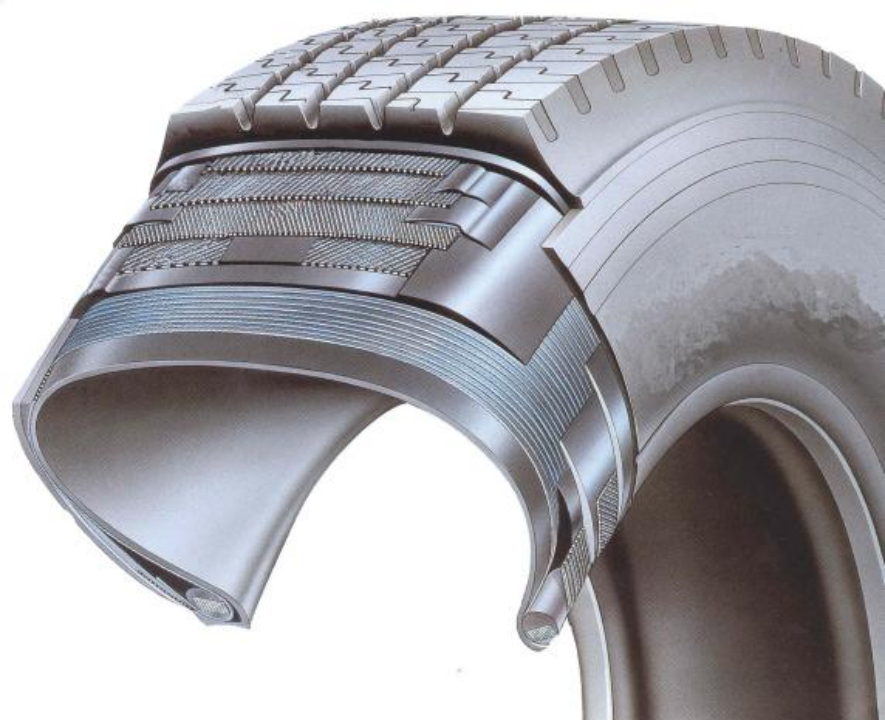
Radial tires feature a revolutionary construction where the body cords run perpendicular (radially) from bead to bead across the tire. A reinforced steel belt package is then applied beneath the tread, providing exceptional stability and strength.

what is radial tires

**Key Characteristics:**

  • Radial body cord arrangement (90-degree angle)
  • Multiple steel belt reinforcement under tread
  • Flexible sidewalls with rigid tread area

III. Tire Classification by Tread Pattern

Tire Classification by Tread Pattern

1. Block Pattern Tires

These tires feature deep, independent block elements separated by wide grooves. The aggressive design maximizes traction and stability during heavy lifting operations.

**Design Features:**

  • Independent block elements with deep grooves
  • Varied block sizes for optimized pressure distribution
  • Specialized sipe designs for enhanced grip
  • Terminal tractors with frequent turning

2. Smooth/Solid Tread Tires (L-5 Pattern)

Characterized by an extra-deep, smooth tread design with minimal pattern elements, these tires maximize ground contact area for specialized applications.

**Design Features:**

  • Ultra-deep tread depth (often exceeding standard patterns)
  • Minimal groove design for maximum rubber contact
  • Specialized rubber compounds for extreme wear resistance

IV. Tire Classification by Tread Depth

Tread depth categorization helps users select tires based on expected service life and operating conditions.

Tread Depth Design Instruction

100%

Tire Regular Tread E-2/E-3 L-2/L-3 G-2/G-3

Regular Tread

E-2/E-3 L-2/L-3 G-2/G-3

150%

Tire Deep Tread E-4 L-4/L-4S G-4

Deep Tread

E-4 L-4/L-4S G-4

250%

Tire Extra Deep Tread L-5/L-5S

Extra Deep Tread

L-5/L-5S

  • Standard Depth (20-40mm): For general port applications with moderate wear conditions
  • Deep Tread (40-60mm): For heavy-duty operations requiring extended service intervals
  • Extra-Deep Tread (60-80mm+): For the most demanding applications where maximum tire life is essential
  • Super Deep (80mm+): Specialized applications like the KT100S pattern for extreme longevity

V. Port Tire Type by Application

1). Container Handlers Tire

Container Handling Equipment Tires

Container Handlers

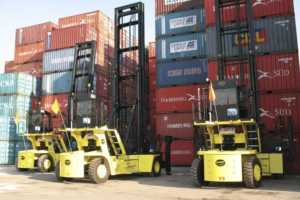
2) Heavy Duty Forklifts

Designed for handling heavy loads in tight spaces, port forklifts require tires that balance load capacity with maneuverability.

Heavy Duty Forklifts

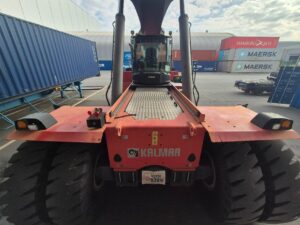
3) Reach Stackers

These versatile machines handle container stacking and transportation, requiring tires that support both lifting and travel functions.

Reach Stackers

4) Straddle Carriers

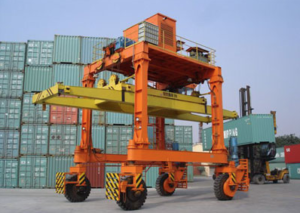
The container straddle carrier is a handling equipment supported by rubber tires and powered by its own engine. It is characterized by high mobility and operational flexibility. Its tires enable free movement on paved surfaces like container yards, eliminating the need for fixed rails like traditional gantry cranes.

Straddle Carriers

5) Terminal Tractors

Terminal tractors also known as yard trucks, these vehicles move containers short distances, requiring durable tires for constant start-stop cycles.

Terminal Tractors

6) Mobile Harbor Cranes

These massive lifting machines require tires capable of supporting extreme weights while maintaining mobility.

Mobile Harbor Cranes

7) Rubber-Tired Gantry Cranes

RTG tires must support massive loads while enabling precise positioning of containers.

Rubber-Tired Gantry Cranes

8) Automated Guided Vehicle (AGV) Tires

Automated Guided Vehicle (AGV): A driverless mobile robot that autonomously transports materials in industrial environments using sensors and software. Following programmed routes or advanced navigation, AGVs move goods, parts, and pallets efficiently, reducing errors and automating repetitive tasks.

Automated Guided Vehicle (AGV) Tires

VI. Tire Classification by Rim Diameter

This classification system helps users understand the scale and capacity of different port tires.

  • Giant OTR Tires  (Rim diameter ≥33 inches)

        Examples: 18.00-33, 21.00-35, 30.00-51, 40.00-57

        Applications: Largest port equipment, heavy mining vehicles

        Load Capacity: 20,000kg+ at 10km/h

  •     Large OTR Tires  (Rim diameter 25-33 inches)

        Examples: 18.00-25, 18.00-33, 23.5-25, 29.5-25

        Applications: Mainstream port equipment, represent approximately one-third of port tire volume

        Load Capacity: 8,000-20,000kg

  •     Medium OTR Tires  (Rim diameter 20-24 inches)

        Examples: 16/70-20, 14.00-24, 16.00-20

        Applications: Medium-duty port equipment, terminal vehicles

        Load Capacity: 4,000-8,000kg

  •     Small Industrial Tires  (Rim diameter <20 inches)

        Examples: 8.25-15, 7.50-15, 10.00-20

        Applications: Support vehicles, smaller material handlers

        Load Capacity: Up to 4,000kg

Click to view ForlanderPort Tire Products

VII. Conclusion

Choosing the correct port tire requires balancing multiple factors—equipment needs, operating conditions, budget, and performance goals. Understanding tire classifications enables port operators to make informed decisions that enhance efficiency, reduce downtime, and lower overall costs.

Industry trends show growing adoption of radial tires for fuel economy and operator comfort, while bias-ply tires remain valued for durability in demanding tasks. The rise of automated terminals is further accelerating tire innovation, especially for AGVs, where precision and reliability are critical.

Contact Us

Contact Form Demo

Related contents

Please fill out the contact form

Contact Form Demo

Search

Please fill out the form to continue

FORLANDER CATALOG 2021-2022 2021.11.1

Forlander Truck & Bus Tires Catalogue 2025

You can download this document for information on our tire products.

2025 Forlander TBR Tires Catalogue

Please fill out the form to continue

2021_FORLANDER__BIAS_OTR_TIRE_CATALOG

Forlander OTR Tires Catalogue 2025

You can download this document for information on our tire products.

2025 Forlander OTR Tires Catalogue

2023 Forlander Bias Tires Catalogue

You can download this document for information on our tire products.

2023 Forlander Bias Tires Catalogue

2023 Forlander OTR Tires Catalogue

You can download this document for information on our tire products.

Forlander OTR Tires Catalogue 2023

Forlander Truck & Bus Tires Catalogue 2023

You can download this document for information on our tire products.

Forlander Truck & Bus Tires Catalogue 2023

TBR Download by Size 2026

You can download this document for information on our tire products.

TBR Download by Size 2026

Forlander Tires Catalogue 2025

You can download this document for information on our tire products.

forlander tbr tires catalogue
Truck & Bus Tires Catalogue 2025
forlander OTR TIRES catalogue
Radial OTR Tires Catalogue 2025
forlander PCR TIRES catalogue
Radial PCR Tires Catalogue 2025

Forlander PCR Tires Catalogue 2025

You can download this document for information on our tire products.

2025 Forlander PCR Tires Catalogue

2024 Forlander Tires Catalogue

You can download this document for information on our tire products.

2024Forlander Tires Catalogue