
I. Introduction
Selecting off-road tyres, buyers focus on tread pattern, appearance and size, often overlooking the XL, LT and HL sidewall markings. At the same size, load ratings differ significantly in maximum load capacity. Under heavy-load overlanding or low-pressure driving on gravel and rock, insufficient capacity risks bulging and debeading. This article compares the three markings by definition, scenario and selection reference to support tire load index selection. For the product catalogue or tyre-related questions, contact Forlander Off Road Tire, which offers a wide range of tread patterns and sizes.

II. Definitions and Technical Characteristics of the Three Load Markings
1. XL tire (Extra Load)
Some AT and RT off-road tyres are offered in XL versions, with basic carcass reinforcement and better paved-road comfort. Their limitation is unsuitability for long-term heavy loads and frequent low-pressure driving on rock and gravel severe terrain; they suit light to moderate off-road use and vehicles with a high proportion of highway driving.
2. LT tires (Light Truck)
Following off-road tyre standards, the carcass plies are thickened, giving the sidewall stronger resistance to compression and impact. Under low-pressure severe off-road conditions, debeading resistance is notably superior. The trade-off is greater carcass stiffness, with increased highway noise and vibration.
3. HL Tire (High Load)
Designed for heavy electric off-road vehicles, with higher load capacity than XL at the same size, addressing the greater overall vehicle weight of electric vehicles.
These markings are stamped near the size specification on the sidewall. Before ordering, confirm with the supplier whether the chosen pattern is the XL or LT version. Forlander Off Road Tire offers load-rating versions across multiple patterns and sizes, which can be confirmed during consultation.

III. Application Boundaries of LT tires
LT is not the only option for off-road vehicles; selection should be based on use scenarios:
1. For off-road vehicles used mainly for urban commuting with only occasional light unpaved driving, XL-rated AT tyres are sufficient; choosing LT tires brings unnecessary highway noise and vibration.
2. For vehicles frequently fully loaded and carrying substantial supplies, driving on gravel, rock and muddy roads with frequent low-pressure off-road use, the LT rating is the reliable choice.
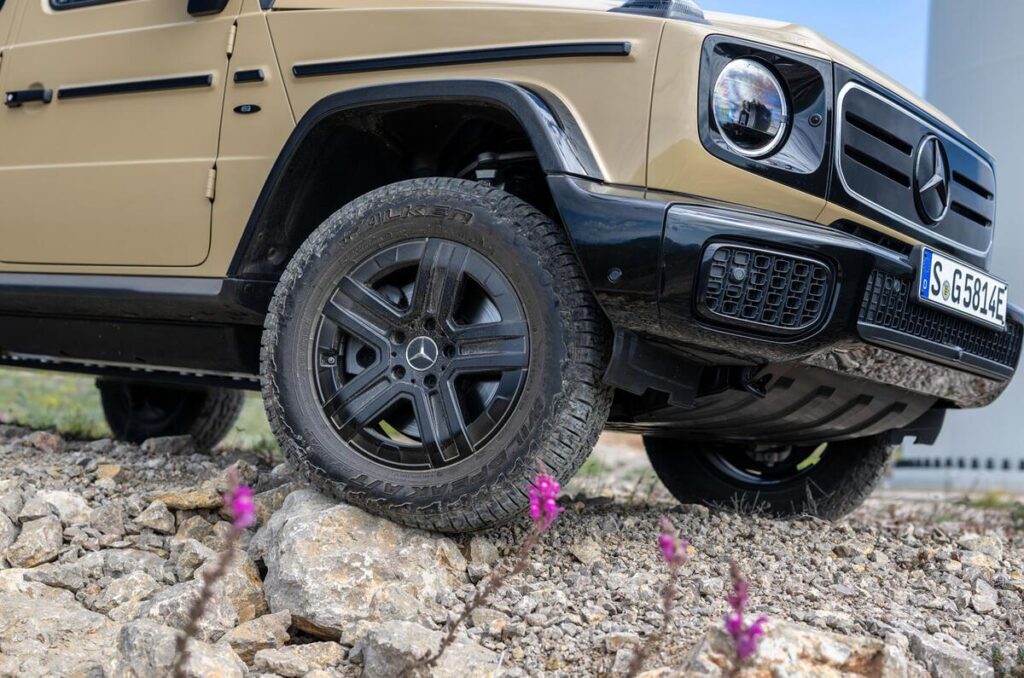
The selection conclusion depends on actual overlanding scenarios rather than vehicle category alone. If uncertain about the load rating matching your use scenario, consult Forlander Off Road Tire for selection advice.
IV. Load Rating Selection Reference
Precondition: tyre load capacity must not be lower than the minimum requirement stated on the vehicle’s B-pillar plate and owner’s manual. The following is for off-road scenario reference only; original manufacturer documentation takes priority.
| Vehicle & use scenario | Preferred load rating | Notes |
|---|---|---|
| Off-road vehicle, daily commuting plus occasional light off-road use | XL tire | Mainly AT/RT tyres; highway comfort prioritized |
| Off-road vehicle, frequent full loads and severe gravel/rock overlanding | LT tires | MT/RT/AT all acceptable; LT version prioritized for debeading and compression resistance |
| Electric off-road vehicle | HL Tire | Greater vehicle weight; high-load version prioritized |
To match specific tread patterns and sizes to your vehicle and use scenario, request the product catalogue from Forlander Off Road Tire, whose product line covers the three load ratings above.

V. Cognitive Boundaries of the XL Marking
XL represents load rating only and is not an off-road performance label. High-performance passenger-car highway tyres also carry XL markings. An off-road tyre model marked XL indicates only basic load reinforcement and does not mean it can be used at arbitrary low pressures on rock and gravel terrain; LT is the rating intended for heavy-load severe off-roading. Load reinforcement is not equivalent to off-road durability.
Tread pattern determines off-road traction, while load rating determines the safety ceiling of off-road tyres. A mismatch between aggressive tread appearance and load reserves relative to actual use creates hidden risks during overlanding.
VI. Confirmation Points During Purchasing
The same off-road tread pattern is often offered in both standard XL and reinforced LT versions. Severe overlanding buyers should not judge by tread appearance alone and must confirm whether the LT rating applies. Some off-road series offer LT-rated specifications with reinforced carcass plies, better adapted to heavy-load and low-pressure off-road conditions, and worthy of attention from hardcore overlanding users.

Forlander Off Road Tire offers a wide range of tread patterns and sizes; before purchasing, request the product catalogue to verify the load-rating version of each pattern and consult on specification compatibility.
VII. Conclusion
Off-road tyre selection hinges on matching the load rating to actual use. XL, LT and HL correspond to basic reinforcement, heavy-load off-roading and heavy electric vehicles, with clear differences in load ceiling and driving characteristics. LT tires resist debeading and compression under heavy load and low pressure but sacrifice highway comfort, and are not necessary for every off-road vehicle. XL indicates load rating only, not off-road performance. Follow the manufacturer’s minimum load requirement, choose the rating by commuting proportion, load level and off-road intensity, and confirm the specific version at purchase to avoid safety hazards from insufficient load reserves.
For product specifications or the catalogue, contact Forlander Off Road Tire.