
I. Introduction
In off-road tire products, the AT vs RT vs MT tires labels correspond to different design positioning and usage scenarios. Consumers often confuse product names and promotional statements when making purchases. After replacing different types of tires on the same vehicle, there are significant differences in noise, fuel consumption, and other aspects, due to the degree of matching between tire types and actual usage scenarios.
The three types of tires are not related to their grade, but are performance choices made for different road conditions. This article explains the definition, structural characteristics, and applicable scenarios of three types of off-road tires: AT, RT, and MT.
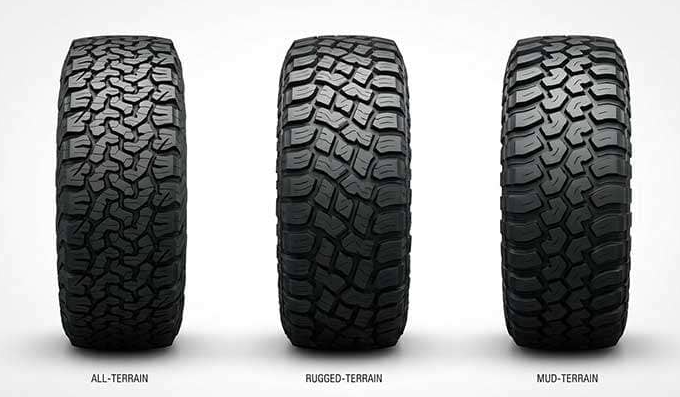
II. AT Tire: All Terrain Tire
AT stands for all terrain tires.

In terms of structure, the size of the AT tire tread blocks is moderate, and the depth of the grooves is relatively shallow. This design enables it to have lower noise and fuel consumption levels when driving on highways, while also meeting the needs of road conditions such as gravel roads, shallow mud, and light crossings. In heavy mud and rock climbing scenarios, the performance of AT tires is limited.
Applicable scenarios: Users who use urban roads account for about 70% and off-road use accounts for about 30%. This type of tire is the main choice for household off-road vehicles.
III. RT Tire: Mixed Mud Tire
RT stands for Rough Terrain and is commonly referred to as a mixed mud tire or semi mud tire. Its positioning is between AT and MT tires.

In terms of structure, the size of the tread blocks on RT tires is larger than that on AT tires, and the depth and width of the grooves are larger than those on AT tires. Its performance is higher than that of AT tires in mud and rock road conditions, and its high-speed driving noise is higher than that of AT tires. This makes rugged-terrain vs all-terrain an important consideration for buyers.
Applicable scenarios: Urban commuting and off-road use each account for about half, and users who need to balance both scenarios and do not have two sets of tires.
IV. MT Tire: Mud Tire
MT stands for Mud Terrain, which is a mud terrain tyre designed for heavy off-road use.

In terms of structure, MT tires use large-sized pattern blocks and deep and wide mud discharge grooves, which have high grip ability in mud, rock and other road conditions. Its limitations include high noise levels during high-speed driving, high fuel consumption, rapid road wear and tear, and decreased grip on paved roads during rainy days.
Applicable scenarios: Users who mainly use heavy off-road vehicles and have a low proportion of road surface driving. This type of tire is not suitable for long-term commuting use.
V. Comparison of Core Differences Among AT vs RT vs MT Tires
The differences among the three types of tires are mainly reflected in the following dimensions:
| Project | AT | RT | MT |
|---|---|---|---|
| Highway Silence | ☆☆☆☆ | ☆☆☆ | ☆☆ |
| Fuel Consumption | ☆☆☆☆ | ☆☆☆ | ☆☆ |
| Gravel Gobi Desert | ☆☆☆☆ | ☆☆☆☆☆ | ☆☆☆☆☆ |
| Rainforest Muddy | ☆☆ | ☆☆☆☆ | ☆☆☆☆☆ |
| Rock Climbing | ☆☆ | ☆☆☆ | ☆☆☆☆☆ |
| Daily Commute | ☆☆☆☆☆ | ☆☆☆ | ☆☆ |
| Target Audience | Household + Occasionally off-road | Commute + Medium off-road | Heavy off-road |
VI. Product Information Reference: Forlander Off-road Tires
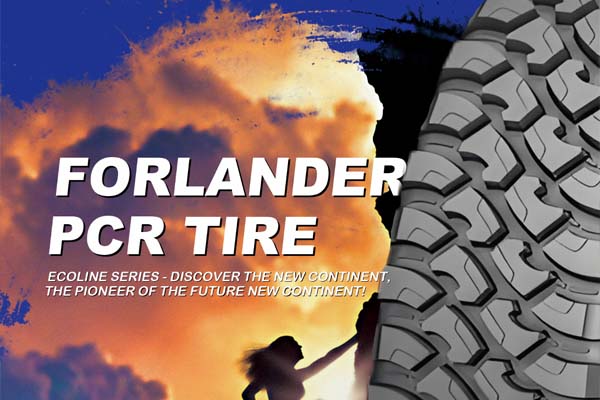
Based on the selection principles of AT, RT, and MT tires mentioned above, the following provides information on Forlander brand ECOLAND series products as a reference.
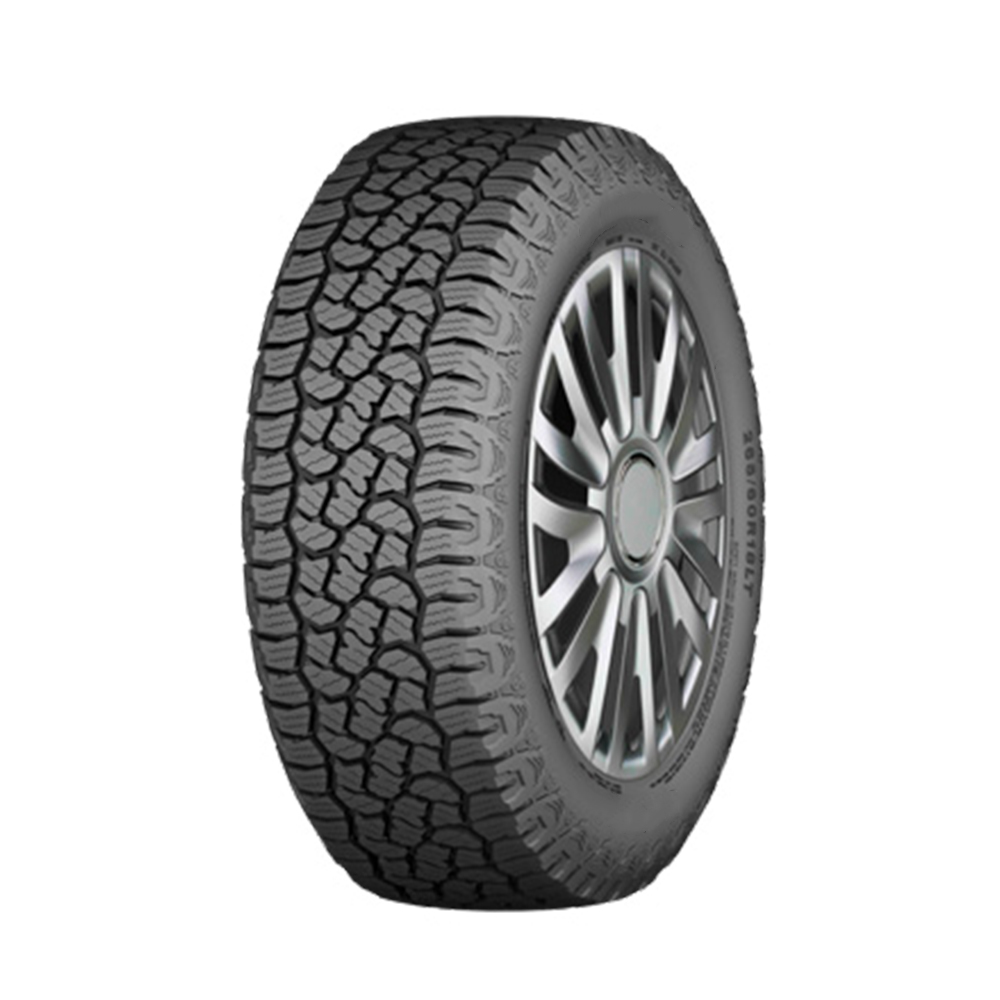
Pattern features:
- The tread adopts a multi steel plate design to reduce heat accumulation and improve grip on dry and wet roads.
- The crown adopts wide and staggered pattern blocks, combined with a stepped design, to increase the grounding area, reduce abnormal wear and improve grip performance.
- The shoulder adopts a stepped and serrated appearance to protect the sidewall from external impact and provide additional grip.
- Available sizes: Available in 15 to 19 inch sizes, such as 215/75R15LT 6PR, 265/70R17LT 10PR, 265/60R18LT 10PR, etc.

Pattern features:
Adopting high-strength and large pattern block design to enhance the rigidity and load-bearing capacity of the pattern blocks.
The staggered block pattern design enhances driving stability.
Multi steel plates and cutting angle design improve grip on dry and wet road surfaces and enhance stone removal performance.
Elastic mud barriers are installed at the bottom of the trench to enhance the adaptability of the mud ground.
The serrated shoulder pattern provides additional protection.
Available sizes: Available in 15 to 19 inch sizes, such as 235/75R15LT 6PR, 285/70R17LT 10PR, 255/55R19LT 8PR, etc.

Pattern features:
- Adopting a wide tread pattern design to provide stronger traction and crossing performance.
- Strategically placed ribs in the middle help maintain straight-line stability while enhancing acceleration performance.
- Grips on the ribs further improve acceleration response and handling control on rough terrain.
Available sizes: Available in 15 to 17 inch, such as 215/75R15LT 6PR, 235/70R16LT 8PR, 265/65R17LT 10PR, etc.
VII. Summary
The three types of Forlander tires, AT, RT, and MT, correspond to different trade-off schemes between highway performance and off-road performance. AT tires are mainly used for highway performance and mild off-road, and are suitable for household off-road vehicles; RT tires cater to both commuting and moderate off-road scenarios, suitable for users who prioritize both; MT tires mainly focus on off-road performance, with a corresponding decrease in road performance.
When making a purchase, it should be based on the composition of the actual usage scenario, checking the structural features such as pattern block size and groove depth, and matching them with the vehicle specifications.
VIII. Common Problem Explanation
Question 1: Can a set of tires cover all road conditions?
No. There is a trade-off between off-road performance and road performance. The heavy off-road demand cannot be met simultaneously with the demands for low noise and low fuel consumption. Users who frequently use off-road vehicles may consider configuring two sets of tires. When comparing all terrain vs mud terrain tires, this trade-off is the key issue.
Question 2: Are RT tires better than AT tires?
No. For users who mainly use urban transportation and have low frequency of off-road use, the noise and fuel consumption of RT tires constitute an additional burden, and choosing AT tires can meet their needs. The applicability of tires should be judged based on their usage scenarios.
Question 3: Which category does the product labeled as “Enhanced AT” belong to?
The product naming systems of various manufacturers are not unified, and the reference value of product names is limited. The basis for judgment should be the width of the pattern grooves and the size of the pattern blocks.
In addition, it is necessary to verify the specifications and parameters when making a purchase. Off road tire brands usually layout three product lines: AT, RT, and MT, covering original factory sizes and modified specifications. Users should match the vehicle model with actual road conditions.