
Tire price increases have become an important concern for tire importers, distributors, wholesalers, and retailers in 2026. Rising natural rubber and synthetic rubber costs, higher energy prices, freight expenses, and supply chain uncertainty are putting continued pressure on tire manufacturing costs.
For tire buyers, the key question is no longer simply whether tire prices will increase. It is how raw material costs, production conditions, logistics, and supplier pricing strategies will affect purchasing decisions throughout 2026.
Why Are Tire Price Increases in 2026?
The main reason behind current tire price pressure is the increase in manufacturing costs.
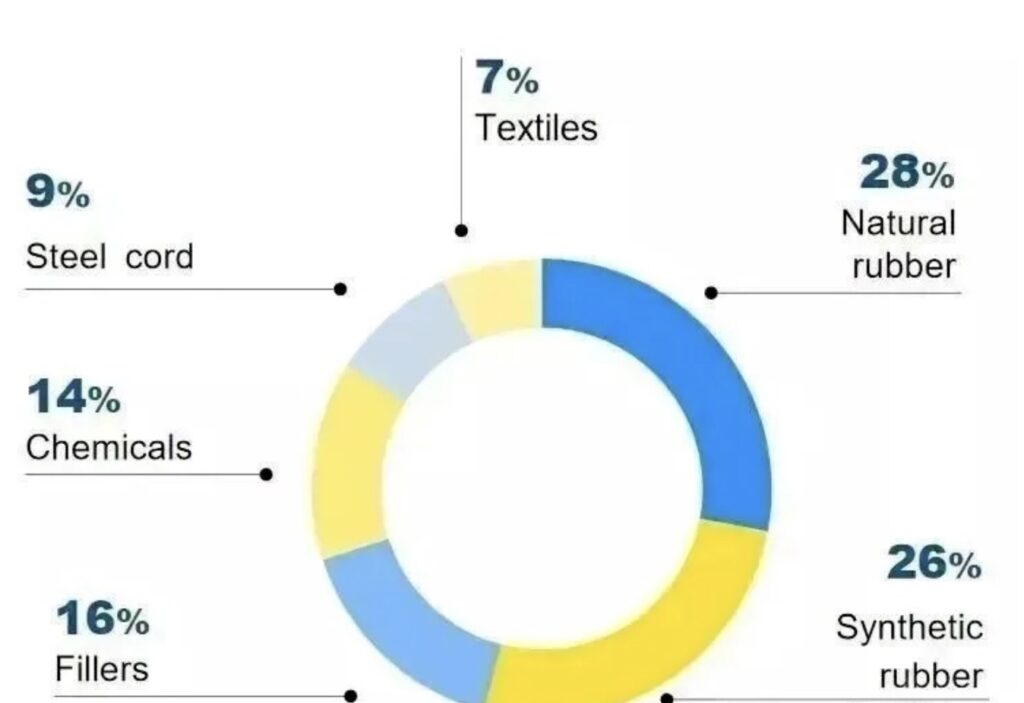
Tire production depends heavily on several major raw materials, including:
* Natural rubber
* Synthetic rubber
* Carbon black
* Steel cord
* Chemicals and additives
* Petroleum-based materials
Natural rubber remains one of the most important cost factors for tire manufacturers. In 2026, rubber markets have been affected by weather conditions, tapping activity, supply availability, inventories, and demand from the global tire industry.
The International Rubber Consortium reported that natural rubber prices remained volatile during 2026, while the Association of Natural Rubber Producing Countries projected global natural rubber production of approximately 15.28 million tonnes for 2026.
This means tire buyers should not look at finished tire prices alone. Changes in raw material markets can eventually influence supplier quotations and replacement costs.
Natural Rubber Prices Remain a Key Factor
Natural rubber prices have shown significant regional and monthly fluctuations during 2026.
According to market data published during the year, natural rubber prices increased in several major producing and consuming markets during the first half of 2026. Weather disruptions, tighter supply during certain periods, freight costs, and demand from tire manufacturers all contributed to market volatility.
However, the market has not moved in a straight line.
For example, ANRPC data for July 2026 showed declines in several physical rubber grades, including SMR-20 and STR-20. This highlights an important point for tire buyers: **higher raw material costs create upward pressure on tire prices, but finished tire prices do not necessarily rise at the same rate or every month.**
For importers, monitoring the direction of rubber prices can therefore provide useful information when planning purchasing schedules.
Synthetic Rubber and Petrochemical Costs Also Matter Natural rubber is only part of the equation.
Synthetic rubber is closely linked to petrochemical feedstocks such as butadiene and styrene. Changes in crude oil prices, refinery operations, petrochemical production, and regional supply can therefore affect synthetic rubber costs.
Market data for 2026 showed upward pressure on synthetic rubber prices during parts of the first quarter, with feedstock costs and supply disruptions contributing to price movements.
For tire manufacturers, this creates a more complicated cost environment because both natural and synthetic rubber can move at the same time.
Other materials, including carbon black and steel cord, can also affect the final manufacturing cost.
Freight and Energy Costs Add More Pressure
Raw materials are not the only factor behind tire price increases.
Manufacturers also need to manage:
* Electricity and fuel costs
* Factory labor costs
* Inland transportation
* Ocean freight
* Port charges
* Warehousing
* Packaging
* Inventory financing
Bridgestone, for example, announced a 5% average adjustment to manufacturer shipment prices for certain Japanese replacement-market tires from September 1, 2026, citing higher tire raw material prices together with logistics, labor, and energy costs.

Yokohama Rubber has also highlighted the impact of raw materials, freight, and energy costs on its 2026 business environment.
These examples show why tire price changes cannot be explained by natural rubber alone.

What Does This Mean for Global Tire Buyers?
or international buyers, the impact of rising costs can appear in several different ways.
1. Higher Supplier Quotations
·When production costs increase, tire manufacturers may adjust export quotations to protect margins.
·The adjustment may happen immediately for new orders or gradually as existing raw material inventories are consumed.
2. Shorter Quotation Validity
·In a volatile raw material environment, suppliers may be less willing to keep quotations unchanged for long periods.
·Buyers may therefore receive quotations with shorter validity periods.
3. Different Prices for Different Tire Categories
·The impact of raw material costs is not identical across all products.
·PCR tires, TBR tires, OTR tires, agricultural tires, light truck tires, and specialty tires have different material compositions, production processes, and market conditions.
·Therefore, a rise in natural rubber prices does not automatically translate into the same percentage increase for every tire size or category.
4. Greater Importance of Purchasing Timing
When prices are volatile, purchasing timing becomes more important.
Importers should consider:
* Current supplier quotations
* Raw material trends
* Existing inventory
* Expected market demand
* Lead time
* Shipping costs
* Currency exchange rates
Instead of simply waiting for prices to fall, buyers should evaluate the total landed cost and their actual inventory requirements.
How Can Tire Importers Manage Rising Tire Costs?
There is no single solution for managing tire price increases. However, several purchasing strategies can reduce unnecessary cost and supply risk.
Compare More Than the Unit Price
A low FOB price does not always mean a lower total purchasing cost.
Buyers should compare:
Tire price + freight + duties + port costs + inland transportation + inventory costs
This gives a more realistic view of the total landed cost.
Work With Multiple Reliable Suppliers
Depending on one supplier or one product source can increase supply risk.
A diversified sourcing strategy can give importers more flexibility when production capacity, raw material costs, or delivery schedules change.
For buyers sourcing from China, comparing different China tire suppliers can also help identify differences in product positioning, manufacturing capabilities, certifications, export experience, and pricing structures.
Plan Orders Around Actual Demand
High raw material prices can create pressure to purchase large quantities before another increase.
However, excessive inventory also creates financial risk.
A better approach is to balance expected demand, lead time, supplier capacity, storage costs, and market pricing.
Consider Different Tire Segments
Importers may also review their product mix.
For example, a portfolio may include:
* PCR tires for passenger vehicles
* SUV and 4×4 tires
* Light truck tires
* TBR truck and bus tires
* OTR tires
* Agricultural tires
* Industrial tires
Different segments serve different markets and customer requirements, which can help distributors reduce dependence on a single product category.
Will Tire Prices Continue to Increase in 2026?
It is difficult to predict a single global direction for tire prices.
Raw material markets remain volatile, and the relationship between raw material costs and finished tire prices is not one-to-one.
Natural rubber prices can rise or fall depending on weather, production, inventories, consumption, and trade conditions. Synthetic rubber prices are influenced by petrochemical feedstocks and energy markets. Freight costs depend on shipping routes, capacity, fuel prices, and geopolitical conditions.
Therefore, a more practical expectation for buyers is continued price volatility and cost pressure, rather than assuming a permanent one-way increase.
What Should Tire Buyers Watch in the Second Half of 2026?
International tire buyers should monitor several indicators:
Natural Rubber Prices
Watch prices in major producing regions including Thailand, Indonesia, Malaysia, and Vietnam.
Synthetic Rubber and Petrochemical Costs
Butadiene, styrene, crude oil, and other petrochemical feedstocks can influence synthetic rubber costs.
Freight Rates
Changes in ocean freight and shipping availability can significantly affect the landed cost of imported tires.
Supplier Price Notices
Manufacturer price announcements can provide an early indication of how cost changes are moving through the supply chain.
Inventory Levels
Both manufacturer and distributor inventories can influence short-term tire availability and pricing.
Exchange Rates
Currency movements can change the actual purchasing cost even when the supplier’s tire quotation remains unchanged.
What Does This Mean for China Tire Suppliers?
China remains an important sourcing market for international tire buyers because of its broad manufacturing base and wide range of tire categories.
For buyers evaluating **China tire suppliers**, price should be considered together with product quality, factory capabilities, certifications, production capacity, lead time, export experience, and after-sales support.
A supplier that offers a low initial quotation may not necessarily provide the lowest overall purchasing cost if quality consistency, delivery reliability, or warranty support becomes an issue.
For this reason, professional tire sourcing increasingly focuses on the complete supply chain rather than simply finding the cheapest tire.
FAQ
Why are tire prices increasing in 2026?
Will tire prices go down in 2026?
How do natural rubber prices affect tire prices?
How can tire importers reduce purchasing costs?
Should buyers stock more tires before another price increase?
Should buyers stock more tires before another price increase?
Conclusion
The 2026 tire market is being shaped by a combination of raw material volatility, energy costs, freight expenses, supply chain conditions, and changing demand.
For tire importers and distributors, the key is not simply to react to every tire price increase. A more effective sourcing strategy is to understand what is driving the price, compare suppliers based on total value, and build a more flexible purchasing and inventory plan.
As global tire sourcing becomes more competitive, reliable suppliers, transparent quotations, consistent quality, and stable delivery will remain important factors alongside price.
For buyers looking for PCR, TBR, OTR, light truck, agricultural, or specialty tires, evaluating the supplier behind the quotation can be just as important as the quotation itself.